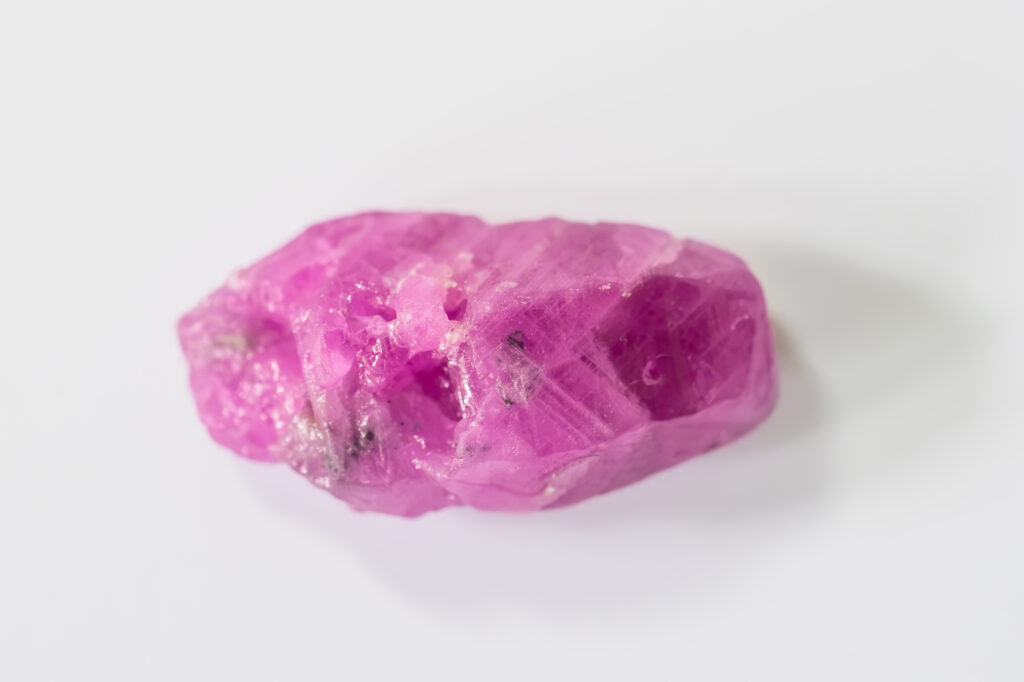
When we sort through a fresh batch of alluvial gem gravels in Ratnapura, the variance in color is immediately striking. Among the pale blues, yellows, and coloractives, you will frequently spot intense, glowing pink crystals. Yet, finding a true, deep red ruby from these same gravels feels like winning a geological lottery.
Many buyers researching engagement rings or investment stones wonder why a magnificent pink sapphire is widely available from Ceylon, while a true Ceylon ruby is an extreme rarity.
The short answer comes down to a razor-thin geological boundary defined by a trace element called chromium. Both gemstones are varieties of the exact same mineral family, corundum. However, Sri Lanka’s ancient metamorphic crust contains just enough chromium to tint the crystals a vibrant pink, but rarely hits the highly concentrated thresholds required to cross the legal line into deep red ruby territory.
Table of Contents
The Basics: Corundum, Color, and Chromium
To understand the difference between these stones, we have to look at their chemistry. In its purest form, the mineral corundum (aluminum oxide) is completely colorless. It is a highly dense crystal structure with a hardness of 9 on the Mohs scale, second only to diamond.
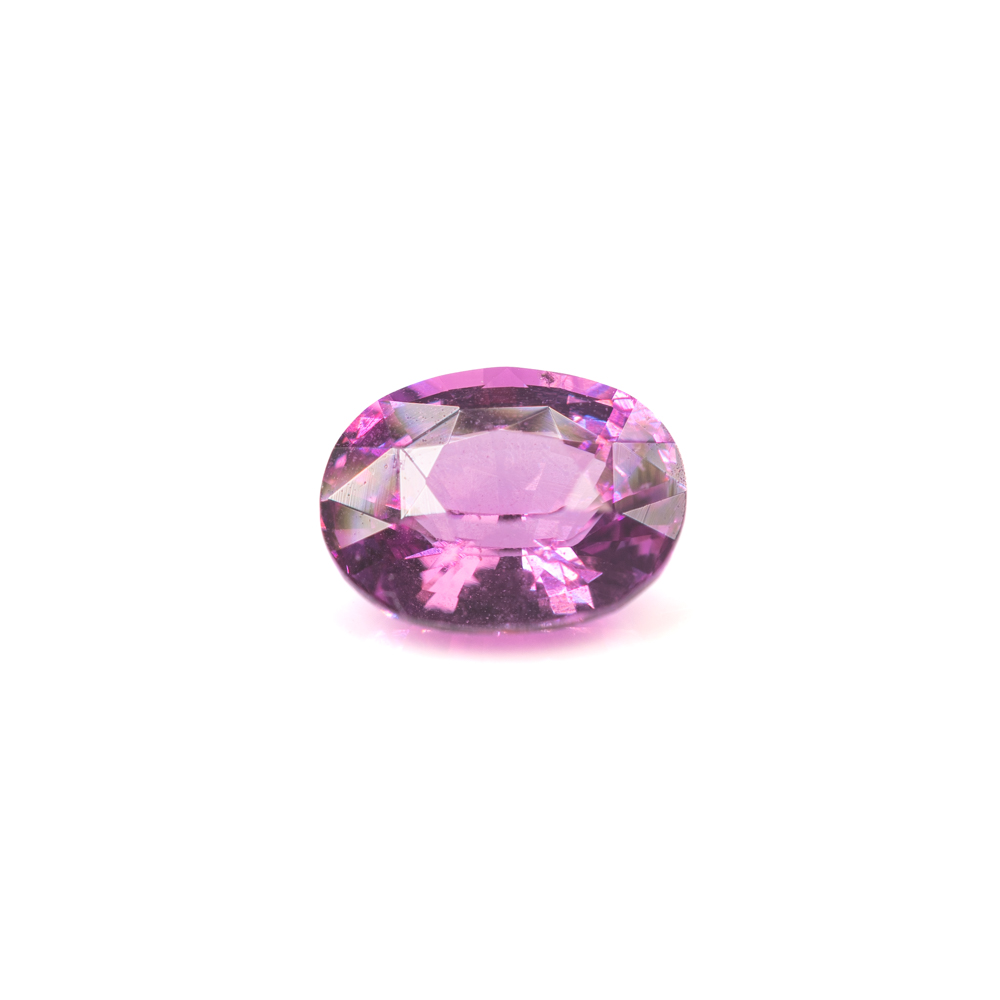
Color only happens when “impurities” slip into the crystal lattice while it grows. When iron and titanium enter the mix, we get blue sapphire. When iron alone is present, we get yellow. But when chromium atoms replace aluminum atoms in the lattice, the mineral starts absorbing green and yellow light, reflecting back a vibrant red-to-pink spectrum.
The concentration of chromium dictates exactly where a gemstone lands on that spectrum:
- Trace amounts (under 0.5% chromium oxide): Yields the soft pastels, hot magentas, and bright fuchsias classified as pink sapphire.
- High concentrations (typically above 1% chromium oxide): Saturates the crystal structure enough to create the deep, historic crimson we call ruby.
Because chromium is an elusive, highly localized element in Sri Lanka’s gem-bearing host rocks, the earth naturally favored the production of pink sapphire over heavy concentrations of ruby.
Did You Know? Chromium is a geological contradiction. It gives rubies and pink sapphires their incredible glow via fluorescence, but too much chromium actually disrupts crystal growth, making large, clean rubies far more difficult to form than clean pink sapphires.
The Geological Riddle of the Sri Lankan Crust
Nearly 500 to 600 million years ago, deep within the earth’s crust, massive tectonic collisions formed the baseline geology of Sri Lanka. High-grade metamorphic rocks, specifically granulites and gneisses, were subjected to intense pressures and temperatures approaching 900°C at depths of 20 to 30 kilometers.
This environment was ideal for corundum formation. Silica (silicon dioxide) is the enemy of corundum because it combines with aluminum to create common minerals like feldspar or quartz instead of gemstone crystals. Sri Lanka’s unique metamorphic bedrock was remarkably low in silica but highly enriched in aluminum.
However, for a true ruby to form, you need a high-temperature environment that is simultaneously rich in aluminum and chromium, yet completely devoid of both silica and iron. Iron is a “killer” element for ruby because it dampens the natural fluorescence caused by chromium, turning what would be a bright red stone into a muddy, dark brown-red.
While places like Myanmar (Burma) feature marble-hosted deposits that are naturally rich in chromium and low in iron, Sri Lanka’s metamorphic belt contains widespread but low-level traces of chromium alongside moderate iron levels.
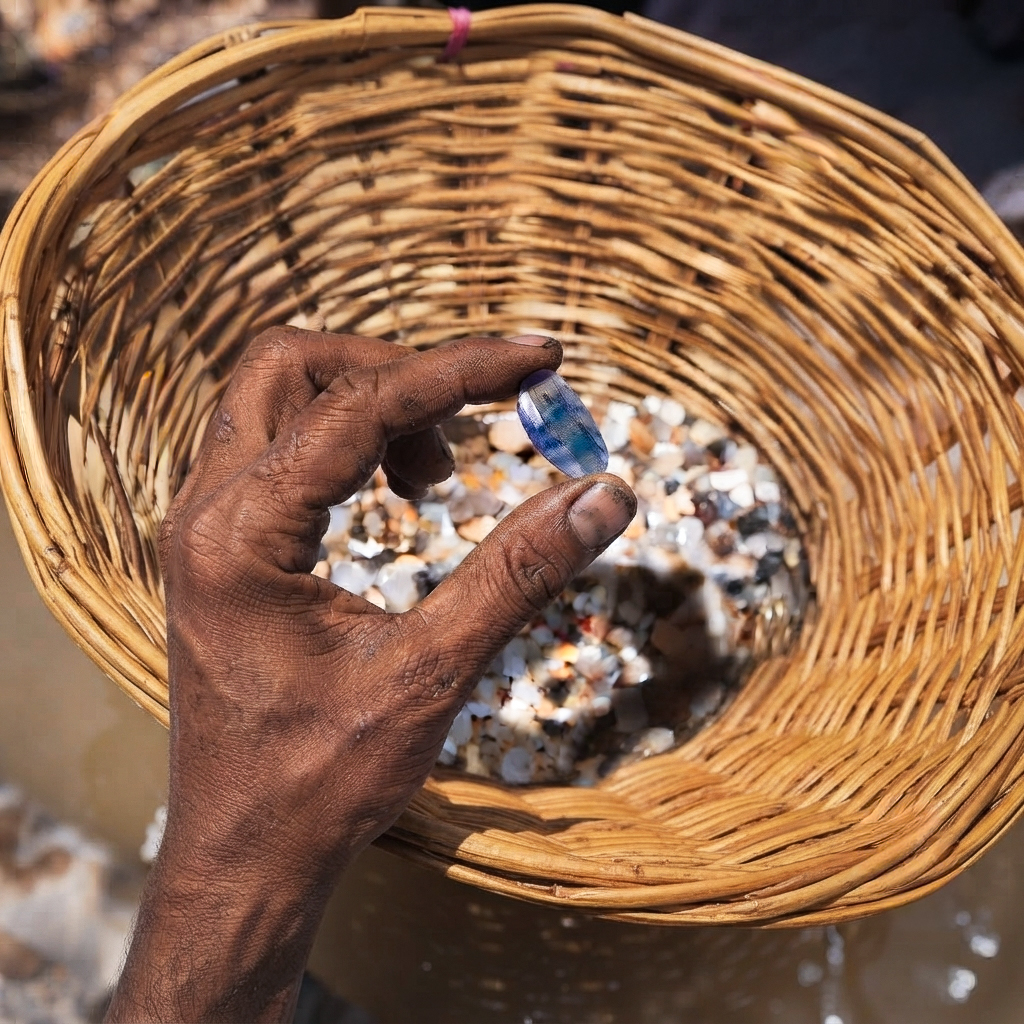
Over millions of years, weathering and erosion washed these hard corundum crystals down from their highland mountain origins into the lowland river valleys. They settled in ancient riverbeds, forming the rich alluvial gem gravels locally called illam.
Because the parent rocks had a widely distributed, low-level supply of chromium rather than dense pockets of it, the resulting alluvial yields are heavily weighted toward magnificent pink sapphire variants rather than saturated red rubies.
| Gemstone Characteristic | Pink Sapphire | Ceylon Ruby |
|---|---|---|
| Primary Trace Element | Chromium (< 0.5%) | Chromium (> 1.0%) |
| Crystal Clarity | Highly transparent, fewer inclusions | Prone to heavier silk and fractures |
| Fluorescence under UV | Strong bright pink to orange-pink | Strong red |
| Relative Rarity in Sri Lanka | Abundant in alluvial gravels | Exceptionally rare |
| Average Price per Carat | Moderate to High | Extremely High |
The Fine Line: Pink Sapphire vs. Ruby Grading Standards
Where does a dark pink sapphire end and a light ruby begin? In the gemological world, this is one of the most hotly contested debates, and it carries enormous financial consequences. A stone graded as a ruby can command a price multiple times higher than the exact same stone labeled as a pink sapphire.
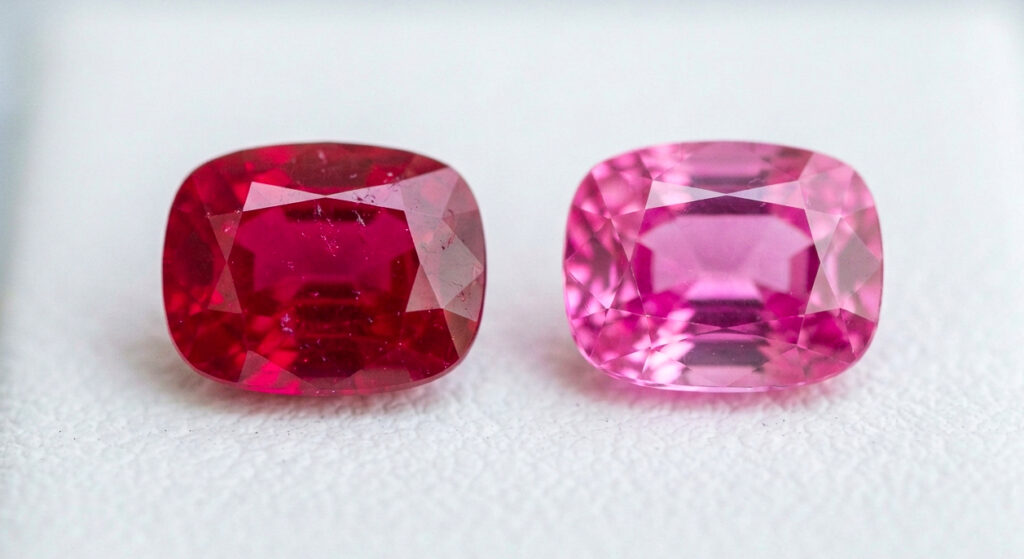
Major gemological laboratories, following the Gemological Institute of America (GIA) fancy sapphire color criteria, utilize master comparison stones to benchmark color boundaries. To be classified as a ruby, the dominant hue must be red. If the stone slips into purple-red, orange-red, or distinctly pinkish-red where red is no longer primary, it falls under fancy pink sapphire.
In Sri Lanka, we view this boundary with a high degree of local nuance. Western markets often demand a rigid distinction, but on the ground in markets like Beruwala or Ratnapura, dealers evaluate the tone and saturation based on how the stone behaves under natural tropical sunlight.
Ceylon rubies do exist, but because of the lower chromium concentrations, they tend to carry a distinct pinkish or purplish secondary undertone compared to the classic “pigeon’s blood” red of Burmese marble-hosted stones.
Expert Tip: When comparing origins, remember that Sri Lankan pink sapphires are celebrated for their exceptional clarity and life. Unlike stones from other locations that can look sleepy or cloudy, a Ceylon pink sapphire usually has excellent transparency, allowing light to bounce dynamically off its facets.
Common Misconceptions About Pink Sapphire
“Pink sapphires are just inferior, washed-out rubies.”
This is a fundamental misunderstanding of gem chemistry. A fine magenta or hot pink sapphire is not a failure to become a ruby; it is a beautifully balanced crystalline expression of trace chromium. Many high-end jewelry designers actively prefer the bright, electric life of a pink sapphire over the darker, occasionally somber tones of medium-grade rubies.
“All pink sapphires are heavily heat-treated.”
While thermal enhancement (heating) is a standard, centuries-old practice used to dissolve needle-like rutile inclusions and improve color clarity, completely unheated pink sapphires with excellent natural color are regularly recovered in Sri Lanka. At Gemstique, we routinely encounter spectacular, entirely natural stones that require nothing more than a precise cut to unlock their fire.
“They are too soft for everyday wear.”
Some engagement ring shoppers worry that pink options won’t hold up over time. Because it is pure corundum, a pink sapphire shares the exact same physical durability as blue sapphire or ruby. It will easily withstand the friction of daily wear without scratching or dulling, making it an excellent alternative to softer pink stones like morganite or kunzite.
What to Look for When Buying a Pink Sapphire
If you are evaluating a pink sapphire for a piece of jewelry or a collection, you need to look beyond the basic carat weight. The stone’s interaction with light is what ultimately defines its value.
- Look for Hue Modifiers: Pure pink is highly prized, but many Ceylon stones carry secondary hints of purple or orange. A subtle purple modifier can give the stone an electric, violet-pink hue under incandescent light, while an orange modifier can push it toward the rare peach territory of a padparadscha.
- Prioritize “Life” Over Pure Size: In our field notes, we often refer to a stone’s “life” — its brightness and scintillation. A slightly smaller, well-cut stone that flashes brilliantly is vastly superior to a large, windowed stone where the middle looks flat and empty due to poor proportions.
- Examine the Fluorescence: Ask to see the stone under natural daylight if possible. Sri Lankan pink sapphires often exhibit incredibly strong fluorescence because they are low in iron, causing them to visually “pop” or glow with incredible intensity when exposed to the UV rays in sunlight.
Buying Tip: Always request an independent certificate from a reputable laboratory (such as GRS, Gübelin, or a recognized Sri Lankan national authority like the NGJA) to verify the stone’s enhancement status. An unheated stone with natural, vibrant saturation holds its premium value far better over time.
How Gemstique Sources This Gemstone
Our sourcing methodology bypasses the multi-layered broker networks that typically inflate prices and obscure a gemstone’s true origin. We operate directly on the ground in Sri Lanka, maintaining long-term relationships with independent miners and traditional lapidaries across the Sabaragamuwa Province.
When an exceptional piece of pink rough corundum emerges from a small-scale alluvial pit, we are often among the first to evaluate it. We analyze the rough stone’s crystal orientation, looking closely at how the color zoning rests within the mineral body.
From there, our local cutting partners cut and polish the stone to prioritize facial color and light return rather than simply cutting for maximum weight retention. Every pink sapphire in our inventory is individually selected, physically inspected by a gemologist, and fully certified, ensuring a transparent chain of custody from the gem gravels of Sri Lanka directly to our clients in Singapore and worldwide.
Conclusion
The earth’s geological history uniquely favored Sri Lanka as a premier source for vibrant pink corundum. By distributing chromium in small, highly refined amounts through its ancient metamorphic crust, nature created an environment where dazzling pink sapphires could flourish in abundance, leaving true crimson rubies as a magnificent, ultra-rare exception.
For the buyer, this geological reality is an opportunity to acquire a durable, exceptionally bright, and visually stunning gemstone with remarkable clarity at a highly justifiable value.
If you would like to see the distinct, fiery glow of these stones for yourself, we invite you to browse our curated collection of Sri Lankan pink sapphires or read more about our field journeys on the Gemstique website.